Where your data lives: our own hardware in Munich
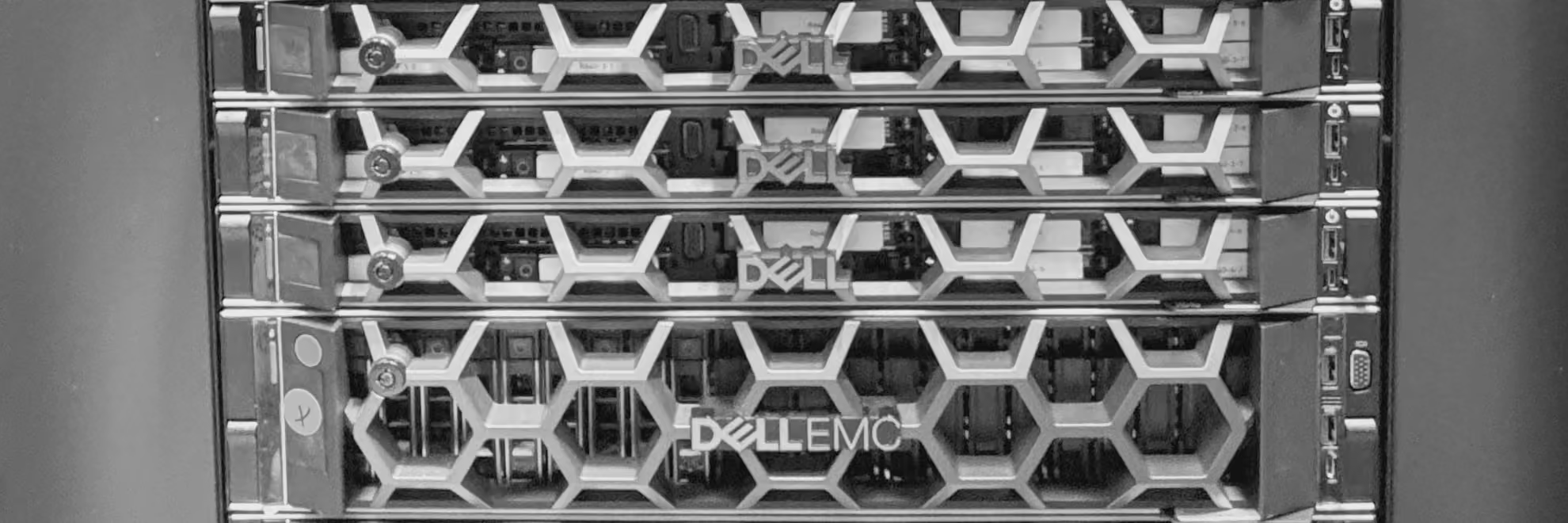
We run our own hardware in a data centre in Munich.
Our platforms and our own product, Fortlauf, run on it. This page says what we operate there, how we protect the data, and which restores we have measured, each with its date.
Location and hardware
As of
- We own the servers, network and storage hardware. It sits in a data centre in Munich. The facility operator provides space, power, cooling and connectivity; we run our systems ourselves.
- We use Proxmox VE for virtualisation, Kubernetes for applications and Ceph for storage. Moving off VMware? See VMware to Proxmox migration.
The platform
As of
Production and development run in separate Kubernetes clusters. Central Ceph storage serves every cluster, including S3-compatible object storage. Every change to the platform is a commit: we roll it out by GitOps with Flux, and secrets sit in the repository encrypted with SOPS and age. Source code and CI pipelines run on a GitLab instance we operate ourselves. Central monitoring watches every cluster and the hardware.
How we run a product on it is shown in the Fortlauf case study: a SaaS product on our own hardware. How we build the same for your platform is described under Kubernetes platforms, built and run.
Encryption
As of
What it covers: disks that are switched off or removed. Not included: data on a running system.
Since 2 Oct 2026, the storage and system disks of our virtualisation hosts have been encrypted.
Period: since
Backups at a second location
As of
Fortlauf's database backups are kept, encrypted, at a second location in Germany; since 5 Oct 2026 they have been encrypted before they leave our hardware.
Period: since
Restores we have rehearsed
As of
A backup only counts once the restore has been measured. Two measurements from our own operations:
We offer the same measurement on a system of your choice as a fixed-scope entry point, the Disaster Recovery Drill, described under Kubernetes platforms, built and run.
Restore rehearsal on 30 Aug 2026: we restored both of Fortlauf's production databases (product data and sign-in) to coordinated points in time, in a separate test environment. Both were back in service 3 min 22 s after the restore configuration was applied; a repeat run the same day took about 3 min 30 s. Not included: the time to decide and prepare, and files kept outside the databases.
Measured
Planned database failover on 4 Oct 2026: we switched Fortlauf's product database to another replica while the service was running. The database cluster was fully back in service 19 s after the switch; writes paused for about 8 to 9 s, and no external request received a server error in that time. Not included: an unplanned outage.
Measured
What we deliberately do not publish here
For security reasons we keep machine names, addresses, network layout, exact software versions and details of key management to ourselves.
What this page is not
These facts describe our own operations. They are not a commitment on availability or response times for your project; that is whatever we agree in the contract.
Want your platform run like this?
We build Kubernetes platforms on our hardware, yours, or in your cloud, and hand them over with a measured restore.